Miroslav Tichy
6 November 2010 - 22 January 2011
pictures


Guido Costa Projects brings the 2010 season to a close with the first one-man show in Italy of work by Miroslav Tichy. The exhibition opens on Saturday 6 November 2010 on the occasion of Artissima’s Gallery Night and will remain open until 22 January 2010.
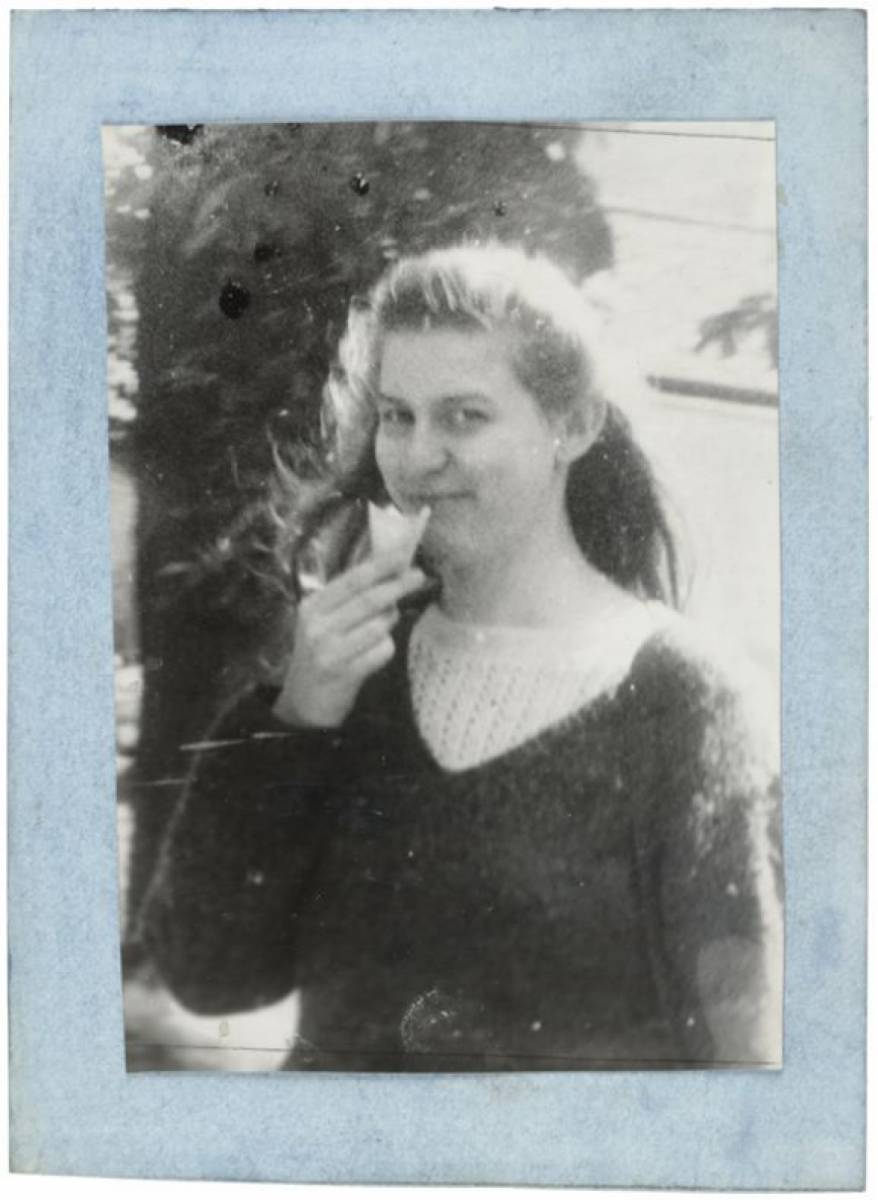
Tichy was born in Kyjov, in the Czech Republic, in 1926, but it wasn’t until the 1980s that he was discovered by Roman Buxbaum. Then it was the turn of Harald Szeeman who invited him to exhibit, thus introducing him for the first time to art lovers. Tichy has a genuine mythical status within contemporary photography and provides us with an extraordinary example of an artist’s lifestyle. He obtained his diploma at Prague School of Art in 1948. In the early 50s he discovered photography and from then on completely dedicated himself to it, working non-stop and in total isolation until the first half of the 90s. Self-taught and self-sufficient (not only did he build his own cameras, he also assembled lenses and enlargers out of odds and ends) Tichy produced a huge body of work, most of which portrays women, during a half century of activity in which he devised a totally unconventional and very personal working technique. His lack of concern for sophisticated photographic materials, lighting and framing, coupled with the compulsiveness of his shots, which border on obsession, allowed him to explore unawares many of the aspects of contemporary aesthetics. The result is an exceptional body of work in terms of structural coherence and image quality. All of this is supported by a keen existential and philosophical awareness that embraces Schopenhauer, atomism and ancient cynicism.
Miroslav Tichy has been living resolutely entrenched on the edge of society for many decades now. He was an awkward figure for the authorities during realised socialism, spending almost ten years of his life in and out of prisons and psychiatric hospitals; he has been tolerated but still pushed to the fringes of society in recent years, finding in art his sole companion. Devoid of humanistic implications, his art is totalising and uncompromising, with no other goal than that of reproducing reality purely and simply. Tichy’s radical and sometimes reckless realism produced highly poetic images, sometimes bordering abstraction, that are however always governed by a masterly use of light and contrast. Working from the fringes of society made him a silent witness of life as it unfurled. He observed and reproduced it for decades through a pure eye, focusing on a total enjoyment of the image and its forms.
His work has come to us by chance thanks to Roman Buxbaum, whose family originates from the same small village in the Moravian region of the Czech Republic. One far off afternoon towards the end of the 80s, Tichy opened up a cupboard in his little home-cum-refuge, crammed with lifetime’s collection of objects, and his miraculous story came to light: the cupboard contained hundreds of dusty, forgotten photos, and many others that were still framed in their own hand-decorated passe-partout, cut out of left-over bits of card. Here was an entire collection of unique and wonderful photographs that he had used to light the fire during cold snaps or to cover the cracks in the broken windows panes of his ramshackled home during the winter, and he had never shown them to anyone.
Armed with one of his bizarre makeshift cameras, that nobody would have ever imagined worked, Tichy slowly created a portrait of his town and its women, patiently developing prints on scraps of paper after having developed his films in the garden at night in an old bath tub. Driven by a rigid dogma he stuck to faithfully he beavered away relentlessly: a fixed number of shots each day for a determined number of years. When he reached that number, there would be no more, ever. The resulting little masterpieces went from Tichy to Buxbaum before ending up - as a result of one of those miracles that are peculiar to art - in the hands of Szeeman, who exhibited them to the public for the first time in 2004 as part of the Seville Biennial. And so the happy fairytale story of Tichy began, a story that has come to an end for him, as he deliberately decided to stop producing photographs. Miroslav Tichy still lives in his simple house in Kyjov which he rarely leaves, nor has he wanted to receive visitors for some years; he has never been to one of his exhibitions, not even the one held at the Pompidou Centre 2008 to celebrate his entry into photography’s Hall of Fame in 2008; and he laughs at those who consider him a great, and all the time continues to fight against the mice who have taken over his larder.
* * * * *
Miroslav Tichy was born in Kyjov, in the Czech Republic, on 20 November 1926. He studied at Prague School of Art from 1945 to 1948. In 1950 he returned definitively to his old home in Kyjov and began showing an interest in photography. From 1950 to1960 he spent several in prisons and psychiatric hospitals. In 1989 the German art magazine Kunstforum published the first article, written by Roman Buxbaum, on him and his work. A few years later he gave up taking photographs. In 2004 his work was presented to the public at the Seville Biennial thanks to Harald Szeeman. The first retrospective of his work was held in the Zurich Kunsthaus in 2005 and a number of exhibitions of his work were organised in public and private art spaces in Europe, the United States and Japan. The Centre Pompidou in Paris organised an important exhibition in 2008 and in 2010 there was the first retrospective of his work in the United States, held at the International Centre of Photography. Special thanks to Foundation Tichy Ocean, Zurich, and Kewenig, Koln.